Article: The Diamond 4Cs Explained: Cut, Color, Clarity, and Carat (Complete Guide)
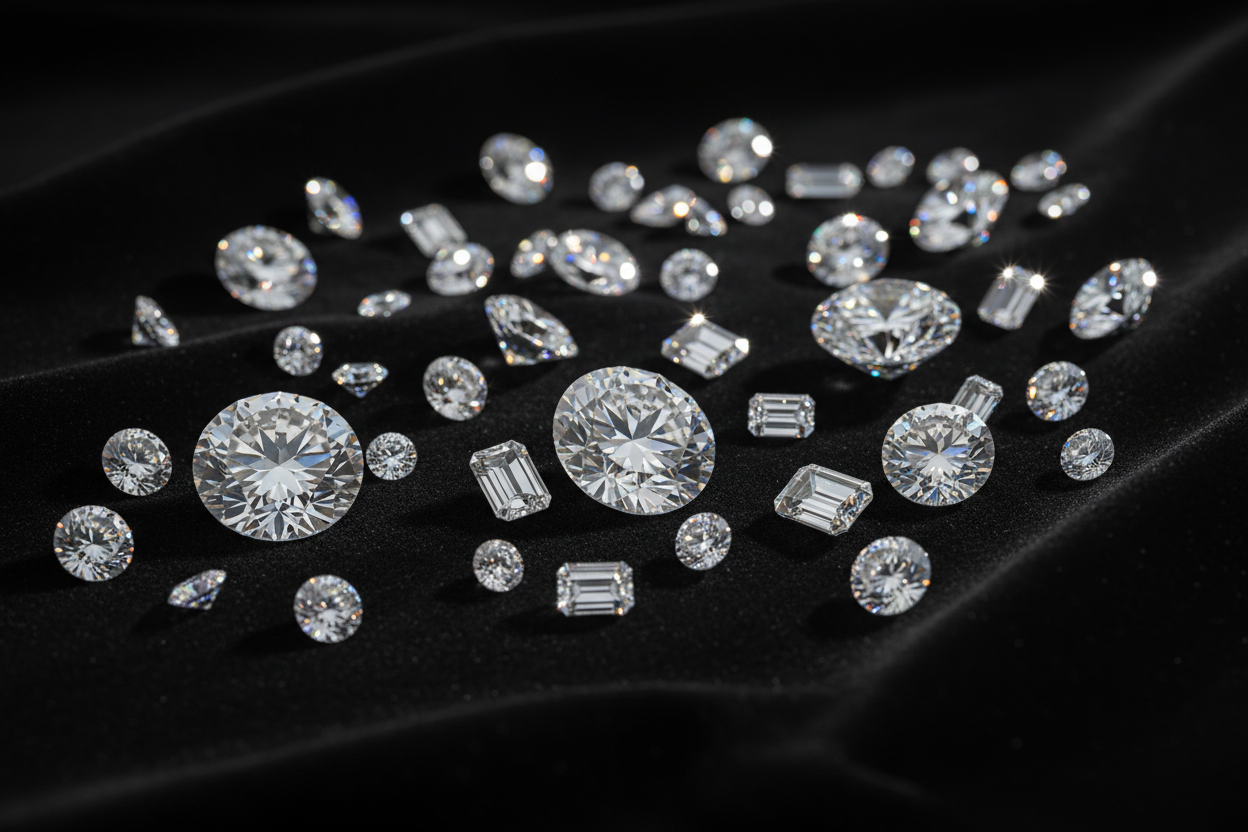
The Diamond 4Cs Explained: Cut, Color, Clarity, and Carat (Complete Guide)

Buying a diamond can feel overwhelming—especially when you start seeing charts, grades, and unfamiliar terms. The good news: almost everything about a diamond’s quality and value can be understood through the Diamond 4Cs: Cut, Color, Clarity, and Carat.
This guide breaks down each “C” in plain English, with practical tips so you can choose a diamond that looks stunning and fits your budget.
What Are the Diamond 4Cs?
The 4Cs are the global standard used to evaluate a diamond’s quality. They describe:
-
Cut: how well the diamond is shaped and how it reflects light
-
Color: how colorless (or tinted) the diamond appears
-
Clarity: how many natural inclusions or blemishes it has
-
Carat: the diamond’s weight (often linked to size)
Together, these determine a diamond’s appearance, rarity, and price.
1) Cut: The Most Important “C” for Sparkle
Cut is the #1 factor that affects how sparkly a diamond looks. A well-cut diamond reflects light back to your eyes, creating that bright, lively “wow” effect.
What cut really means
Cut is not the shape (round, oval, marquise, etc.). Cut refers to how well the diamond’s facets are proportioned and polished.
Common cut grades (round brilliant)
-
Excellent / Ideal: maximum brilliance and fire
-
Very Good: great sparkle, often better value
-
Good: can look a bit less lively
-
Fair / Poor: noticeably dull or “glassy” in many cases
Best tip for buyers
If you want the diamond to look bigger and brighter, prioritize cut first—especially for round diamonds, where cut grading is the most standardized.
2) Color: How White (or Warm) Your Diamond Looks
Diamond color grading typically measures how colorless a diamond is. Most diamonds have a slight yellow or brown tint.
The color scale (most common)
-
D, E, F: Colorless (bright, crisp, icy look)
-
G, H, I, J: Near-colorless (still looks white to most people, great value)
-
K and below: Noticeably warmer (can still be beautiful depending on style)
Metal choice matters
-
White gold / platinum: tends to make the diamond look whiter/cooler.
-
Yellow gold / rose gold: tends to make the diamond look warmer in color.
3) Clarity: Inclusions, Blemishes, and What You Can Actually See
Clarity measures the presence of natural characteristics inside (inclusions) or on the surface (blemishes). Almost all diamonds have some—diamonds are made under intense heat and pressure.
Common clarity grades
-
FL / IF: Flawless / Internally Flawless (rare, pricey)
-
VVS1 / VVS2: Very, very small inclusions (hard to see even with magnification)
-
VS1 / VS2: Very small inclusions (usually eye-clean)
-
SI1 / SI2: Small inclusions (may be eye-clean depending on the diamond)
-
I1 / I2 / I3: Inclusions are often visible to the naked eye
What “eye-clean” means
An eye-clean diamond has inclusions that you can’t see without magnification at normal viewing distance. Many people aim for this instead of paying for ultra-high clarity.
4) Carat: Weight, Size, and Why Two Diamonds Can Look Different
Carat is the diamond’s weight, not its exact face-up size. Two diamonds of the same carat weight can look different in size depending on cut and shape.
Carat vs. visual size
-
A well-cut diamond often looks larger and brighter
-
Different shapes “spread” differently:
-
Oval, marquise, pear often look larger than rounds at the same carat weight
-
Round tends to cost more per carat because demand is high and cutting waste is greater
Best tip for buyers
If you want a bigger-looking diamond, consider a shape with more spread (like oval or marquise) and keep cut quality strong. Cushion and Emerald carries most of their weight under so they will appear smaller than other shapes.
How the 4Cs Work Together
Here’s the truth: you’re not shopping for the “best grades”—you’re shopping for the best-looking diamond for your budget.
A smart strategy is:
-
Prioritize Cut (sparkle)
-
Choose near-colorless unless you love an icy look
-
Pick eye-clean clarity
-
Then choose carat based on the look you want


Leave a comment
This site is protected by hCaptcha and the hCaptcha Privacy Policy and Terms of Service apply.